
The main types of massage are Swedish, deep tissue, sports, myofascial release, cupping, lymphatic, prenatal, cranial sacral, medical and hot stone. They differ in three ways: how firm the pressure is, which layer of tissue the therapist works, and whether the goal is relaxation or fixing a specific problem. Swedish and deep tissue are the two most booked, and most sessions blend two or three techniques rather than using one.
Eleven of these are on our menu at Above & Beyond Wellness Spa in Fenton, Missouri, in true 30, 60 or 90 minute sessions. Below: what each type does, the pressure, whether you may be sore the next day, who it is not for, and what we do not offer.
If you already know what hurts and want to know which session to book, read which massage to book for what hurts. Prices and booking are on our massage services page.
I am Sarah Hankammer. I own Above & Beyond Wellness Spa and have practiced as a Licensed Massage Therapist (LMT) since 1999 (Missouri license 2015027635, check it with the state). My own sessions are myofascial release, soft tissue release, sports, range-of-motion stretching, cranial sacral, cupping, lymphatic, Swedish, prenatal and medical, and our licensed team covers the rest of the menu.
Find your session in two taps
Tap 1: what you want. Tap 2: how firm you like it. Your answer opens right under the one you tapped, and each type is explained in full below.
Relax and sleep better (Stress, sleep, a first visit.)
How firm do you like it? Tap one.
Light
Swedish, Raindrop or cranial sacral.
Medium
Swedish, or therapeutic and say so.
Firm
Ashiatsu, deep pressure by foot.
Fix a tight or sore spot (A knot that has lasted weeks, desk posture.)
How firm do you like it? Tap one.
Light to medium
Cupping or myofascial release.
Firm
Deep tissue and sports, or medical.
Skip if: You take blood thinners or bruise easily.
Recover from training or surgery (Training soreness, or healing after a procedure.)
Which sounds like you? Tap one.
After training
Deep tissue and sports, or cupping. Not inside 48 hours of a race.
After surgery, once cleared
Lymphatic for swelling, myofascial release later.
Skip if: Surgery in the last few weeks without clearance, or one leg swollen for no reason.
Comfort in pregnancy (Second trimester on.)
What do you want to know? Tap one.
What to book
Prenatal only, from the second trimester.
What it helps with
Low back, hip and leg discomfort, swelling, poor sleep.
What to skip
Ashiatsu, and the first trimester.
Headaches or jaw tension (Tension headaches, migraines, TMJ.)
How firm do you like it? Tap one.
Light
Cranial sacral, fully clothed.
Medium to firm
Deep tissue on the neck and shoulders only.
Doctor first if: It is a new or worsening problem. The full doctor-first list is near the bottom of this page.
Still not sure? Book a 60-minute therapeutic session on our massage services page and tell us what you want. The mix is built in the room.
The different types of massage on our menu, side by side
Read the pressure and the “not for” columns first. They rule out more bad bookings than anything else on this page.
On a phone, slide the table left and right to see all five columns.
| Type | Pressure | What it is for | Not for | Sore after? |
|---|---|---|---|---|
| Swedish | Light to medium | Stress, first visits, sleep | Chronic knots that need firm work | Rarely |
| Therapeutic | Adjusted as we go | Everyday tension, a mix of techniques | Nobody in particular. It is the default | Sometimes, mild |
| Deep tissue and sports | Firm, slow | Long-held tension, training soreness, repetitive strain | Acute injury, easy bruising, blood thinners | Often, 24 to 48 hours |
| Myofascial release | Sustained, no oil | Posture, old injuries, tightness that comes back | Skin that cannot take slow stretch | Rarely |
| Cupping | Suction, light to medium | Stuck tissue, fascia, circulation | Blood thinners, fragile skin, open wounds | Round marks for a few days |
| Cranial sacral | Very light | Headaches, jaw tension, nervous system reset | Anyone wanting deep pressure | No |
| Lymphatic | Very light, rhythmic | Swelling, post-surgery recovery, feeling puffy | Active infection, blood clots, heart or kidney conditions without clearance | No |
| Prenatal | Light to medium, side-lying | Back, hip and leg discomfort in pregnancy | First trimester or a high-risk pregnancy without your provider's OK | Rarely |
| Medical | As the condition needs | A named problem, often with a provider's guidance | Relaxation-only goals | Sometimes |
| Ashiatsu | Broad, deep, by foot | Large muscle groups, people who find hands too pointed | Recent surgery, osteoporosis, pregnancy | Sometimes |
| Raindrop | Light | Stress, a full sensory reset | Essential-oil sensitivity | No |
More on each massage type
Open any type for the three things people ask before booking it.
Book it for: Stress, trouble sleeping, general stiffness, a first visit. It also helps circulation and eases muscle tightness.
What to expect: Light to medium pressure, long strokes toward the heart, a full body in 60 minutes. You leave relaxed rather than worked.
Skip it if: You came in for a knot that has lasted months. That needs deep tissue.
Book it for: Everyday tension from desks, driving and screens, and recovery from a minor strain.
What to expect: A blend of Swedish, deep tissue, trigger point and myofascial work, with the pressure adjusted as we go.
Skip it if: Nobody in particular. It is the default booking when you are not sure.
Book it for: Long-held knots, training soreness, repetitive strain, desk posture, scar tissue after an old injury, and tension headaches that start in the shoulders.
What to expect: Slow, firm work with forearms, elbows and knuckles, a six or seven out of ten, and 24 to 48 hours of post-workout soreness.
Skip it if: You have a race or a big day within 48 hours, you bruise easily, or you take blood thinners.
Book it for: Tightness that keeps coming back, old injuries, posture, and stiffness after surgery once you are cleared.
What to expect: Sustained holds without oil that feel like a slow stretch. It is folded into most sessions here.
Skip it if: Your skin cannot take slow pulling.
Book it for: Stuck tissue, fascia tightness, circulation, and spots that hands cannot press into.
What to expect: Suction instead of pressure, cups left in place or glided, and round marks that fade in a few days. They are not bruises.
Skip it if: You take blood thinners or have fragile skin or open wounds.
Book it for: Tension headaches, migraines, a tight or clicking jaw, trouble sleeping, and a nervous system that will not settle.
What to expect: Touch about the weight of a coin at the head, neck and base of the spine, fully clothed, in a quiet room.
Skip it if: You want to feel pressure.
Book it for: Swelling, recovery after surgery or a cosmetic procedure, fluid retention, and a puffy, heavy feeling.
What to expect: Very light, rhythmic strokes toward the lymph nodes, and often a strong urge to nap afterward.
Skip it if: You have an active infection, a known or suspected blood clot, or a heart or kidney condition without clearance.
Book it for: Low back, hip and leg discomfort, swelling and poor sleep from the second trimester on.
What to expect: Side-lying with cushions, light to medium pressure, and no deep work on the legs or abdomen.
Skip it if: You are in the first trimester, or the pregnancy is high risk and you do not have your provider’s OK.
Book it for: One named problem: chronic back pain, fibromyalgia, arthritis, recovery after an injury or surgery, often with your doctor or physical therapist involved.
What to expect: Targeted work from deep tissue, trigger point, lymphatic and myofascial techniques, and a focus on how you move afterward.
Skip it if: Relaxation is the goal. Book Swedish.
Book it for: Large muscle groups, people who find hands too pointed, and anyone who wants deep pressure without elbows.
What to expect: Broad, deep pressure delivered by the therapist’s feet and body weight.
Skip it if: You had surgery recently, have osteoporosis, or are pregnant.
Book it for: Stress and a full sensory reset.
What to expect: Young Living essential oils along the spine and feet, weighted tuning forks and light strokes.
Skip it if: Scents bother you.
For relaxing: Swedish and Raindrop
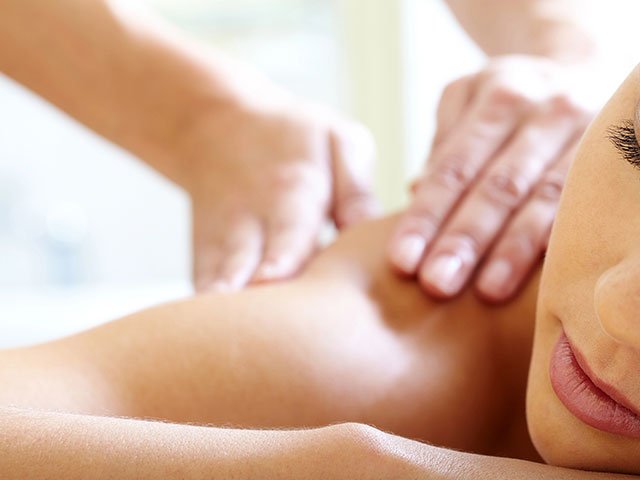
Swedish is the session most people picture. It uses five strokes: long gliding strokes, kneading, small circles, light tapping and gentle shaking. Pressure stays light to medium and follows the direction of blood back toward the heart.
Swedish is the right first session if you are new, sensitive to pressure, or here to unwind after a hard week. It is the wrong session if a knot has lived in your shoulder for months. That needs deep tissue.
Raindrop is our other relaxation session. Young Living essential oils go along the spine and the feet, with weighted tuning forks and light strokes. Skip it if scents bother you.
For a problem: deep tissue, sports, myofascial release, cupping and medical

Deep tissue and sports work are one booking here. The strokes are slow and firm and reach the deeper muscle and the fascia, the thin sheet of tissue that wraps every muscle. I use forearms, elbows and knuckles where thumbs are not enough.
Firm should never mean sharp. If it crosses into sharp pain, say so, and I change it that second.
Expect to feel worked the next day, the way you do after a hard workout. It passes in 24 to 48 hours. If you have a race or a big day in the next two days, book Swedish instead.
Myofascial release is slower still, done without oil, holding a stretch on the fascia until it lets go. I bring it into most sessions because tightness that keeps coming back usually lives there, not in the muscle.
Cupping uses silicone cups to lift the tissue instead of pressing it down, and I leave the cups in place or glide them. The suction reaches layers my hands cannot press into, and it can leave round marks for a few days. Not for anyone on blood thinners. Wondering what the research says? Read does cupping work.
Medical massage is aimed at one named problem, often with your doctor or physical therapist in the loop. It borrows from deep tissue, trigger point work, lymphatic and myofascial release. The goal is a measurable change in how you move, not relaxation.
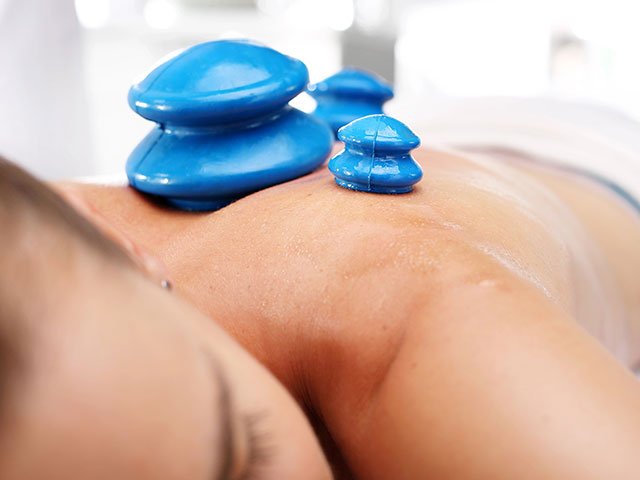
Cupping marks are not bruises. They are blood drawn to the surface by the suction, and they fade on their own within a few days.
Gentle and specific: cranial sacral, lymphatic and prenatal

Cranial sacral is the lightest touch on the menu, about the weight of a coin, at the head, neck and base of the spine. I use it for tension headaches, a tight jaw and a nervous system that will not settle. If you want to feel pressure, this is not your session.
Lymphatic work is light and rhythmic on purpose. The lymph system has no pump of its own, so slow, wave-like strokes move fluid toward the nodes, and firm pressure flattens the vessels and does the opposite. It suits swelling, recovery after surgery, and that puffy, heavy feeling.
Prenatal sessions are done side-lying with cushions from the second trimester on, with light to medium pressure and no deep work on the legs or abdomen. Bring your provider’s OK if your pregnancy is high risk. We do not book first-trimester sessions.
Stretching, couples and add-ons
Assisted stretch sessions run 20 or 30 minutes and work on range of motion and posture. Ashiatsu uses the therapist’s feet and body weight for broad, deep pressure over large muscles.
A couples session puts two of you in the same room with two therapists, and the two sessions do not have to match: one Swedish, one deep tissue is fine. Two 60-minute therapeutic or Swedish sessions are $230 and two 90-minute sessions are $330 for non-members. If one of you talks through it, we can use separate rooms.
Add-ons fit inside any session: a warm-oil scalp treatment, Himalayan salt stones, 15 or 30 minutes of foot reflexology, abdominal cupping, facial cupping, or a gold-infused serum.
Swedish vs deep tissue: the two most-booked, side by side
Swedish and deep tissue are the sessions people compare most, and they are opposites in almost every way that matters.
On a phone, slide this comparison left and right if it does not fit.
| Swedish | Deep tissue | |
|---|---|---|
| Pressure | Light to medium | Firm and slow |
| Strokes | Long, gliding, kneading, toward the heart | Short, deliberate, into one area at a time |
| Reaches | Skin and the top muscle layer | Deeper muscle and the fascia around it |
| Feels like | Relaxing throughout | Working pressure, a six or seven out of ten in tight spots |
| Sore after? | Rarely | Often, for 24 to 48 hours |
| Book it for | Stress, sleep, a first visit | Knots that have lasted weeks, training soreness, desk posture |
| Skip it if | A knot has lasted months | You have a race or a big day within 48 hours, bruise easily or take blood thinners |
Most of our 60-minute sessions are a blend: Swedish to warm the tissue, then deep tissue only on the two or three spots that need it. You do not have to choose one for the whole hour.
What we do not offer
Thai, Balinese and Shiatsu are not on our menu. Hot stone is offered as a salt-stone add-on inside a session, not as a stand-alone 60-minute stone session. If one of those is what you want, book it elsewhere and come back for the rest.
How I decide pressure and technique in the room
- Two questions first. What hurts, and what do you want to get back to doing? The answers pick the technique before the session starts.
- A check-in inside the first five minutes. I ask for a number from one to ten. A six or seven that you can breathe through is working pressure. An eight or above is too much, and I back off.
- Pain with a purpose, not pain for its own sake. A tender spot that eases as I hold it is doing something. A sharp, spreading or electric feeling is not, and I move.
- Techniques mix. Most sessions carry two or three: Swedish to warm the tissue, myofascial release where it is stuck, cupping or trigger point work on the worst spot.
- You decide the last word. Say “lighter” or “stop” at any point. Nothing on this page needs you to grit your teeth.
What the research supports, and what it does not
The National Institutes of Health keeps a plain summary of the evidence, and we would rather quote it than oversell. Massage has weak to moderate evidence for short-term relief of low back pain, neck and shoulder pain and knee arthritis pain, and mixed results for headaches. About 1 in 9 American adults used massage in 2022, more than double the share in 2002.
Read it yourself at the NIH massage page. What a massage will not do: it cannot repair a torn muscle, a herniated disc or the arthritis itself. It eases the tissue around them.
What that means for you: expect real relief that lasts days to weeks and builds with regular sessions, not a cure. Serious harm from massage is rare, and most reports involve very firm work on older or fragile clients. That is why the check-in above is not optional.
When to check with a doctor first
Our booking policy and the NIH agree on these. Get your doctor’s guidance before a session if you have:
- A fever or an active infection.
- An injury or surgery in the last few weeks.
- A blood-clotting condition, or you take blood thinners. This rules out deep tissue and cupping until cleared.
- A known or suspected blood clot, or unexplained swelling in one leg. That is a same-day doctor visit, not a lymphatic session.
- Pregnancy. Book prenatal only, and tell us your trimester and any complications.
- Open wounds, burns, a rash or a skin infection in the area.
Never use a session to put off seeing a doctor about a new or worsening problem. Once you are cleared, tell us what the doctor said and we build the session around it.
Book a session in Fenton
Every type above is on our menu in 30, 60 or 90 minute sessions at 50 Fenton Plaza. Clients drive in from Kirkwood, Arnold, High Ridge, Ballwin, Valley Park and Sunset Hills.
Members get $5 to $55 off services and 10% off retail skincare. Book online, or call 1-636-492-2668.
Frequently asked questions
Short answers to what people want to know before booking a first massage.
Book a 60-minute Swedish or therapeutic session. Pressure stays light to medium, you learn what the table feels like, and you rarely feel sore after. Tell the therapist if one area needs firmer work and it can be blended in.
Swedish works the surface layers with long, flowing strokes at light to medium pressure to relax you. Deep tissue uses slow, firm pressure to reach deeper muscle and fascia and release long-held tension. Swedish rarely leaves you sore, while deep tissue often does for 24 to 48 hours.
No. Firm is fine, sharp is not. On a one-to-ten scale, a six or seven you can breathe through is working pressure. Anything higher, say so, and the pressure changes at once.
For a specific problem, weekly or every two weeks until it settles, then monthly. For stress and maintenance, monthly works for most people. Your therapist will suggest a spacing after the first session.
Well over 80 styles exist worldwide. Eleven are on our menu in Fenton: Swedish, therapeutic, deep tissue and sports, myofascial release, cupping, cranial sacral, lymphatic, prenatal, medical, Ashiatsu and Raindrop.
Swedish, Raindrop or cranial sacral. All three use light pressure and calm the nervous system. If your stress lives in your shoulders as knots, add deep tissue on that area only.
Five Swedish strokes (gliding, kneading, friction, tapping and shaking), sustained myofascial holds, trigger point pressure, cupping and assisted stretching. Most sessions here use two or three of them: Swedish to warm the tissue, myofascial release where it is stuck, cupping or trigger point work on the worst spot. Say what you want and the mix is built around it.
Two questions: what hurts, and what do you want to get back to doing. Then you undress to your comfort level under the sheet, or stay clothed for stretch and cranial sacral work. The first check-in on pressure comes within five minutes.
Not sure which of these fits what you feel? Read which massage to book for what hurts. For recovery days, many clients pair a session with red light therapy, and for pain that is not muscular, see laser pain relief.
More about Sarah Hankammer.
References
- National Center for Complementary and Integrative Health (NIH): Massage Therapy, What You Need To Know
- Missouri Division of Professional Registration, licensee search
General information only, not medical advice. Individual results vary.